제 30 호 Surviving the Era of Expensive Energy : High Oil Price Relief Fund of Korea
Kicker: SOCIETY
Surviving the Era of Expensive Energy : High Oil Price Relief Fund of Korea
by Sumin Lee, Reporter
Earlier this February, following the ongoing war between Russia and Ukraine, a new conflict broke out between the United States and Israel against Iran. As the war continues without a ceasefire, its impact has spread far beyond the countries directly involved, affecting the global community as a whole. Among the most significant consequences is the blockade of the Strait of Hormuz, which has severely restricted the transportation of crude oil around the world. As a result, oil prices have continued to rise globally, including in South Korea. The industries most immediately affected are those closely tied to fuel consumption, such as the automobile and gas station industries. In addition, the rising cost of oil has also led to higher prices for everyday necessities, including clothing and other consumer goods. In response to these growing economic pressures, the Korean government has introduced a compensation policy for damages caused by high oil prices. In this article, we will take a closer look at how the High Oil Relief Fund of Korea program is structured and how citizens can make use of it. Furthermore, beyond simply examining the policy itself, we will also explore public opinions surrounding the measure in order to provide a broader and more balanced perspective on the issue.
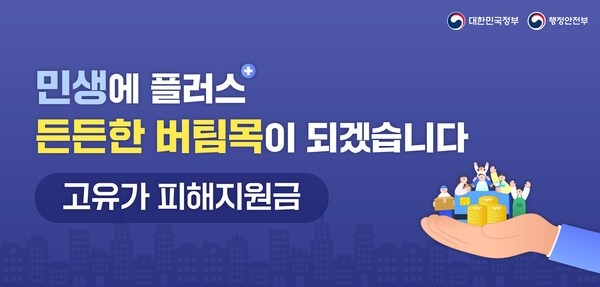
To ease the burden on ordinary citizens caused by high oil prices, a weak Korean won, and rising inflation, the government is providing High Oil Price Damage Relief Funds. The government explained that this measure is not simply financial support, but an emergency stabilization policy intended to prevent shocks in the global energy market caused by war from spreading throughout the domestic
economy.
The Detail of the Policy
According to the policy, support will be provided to 70% of the population, with payments ranging from 100,000 won to 600,000 won per person through customized support based on income level and region. In the Seoul metropolitan area, basic livelihood recipients will receive 550,000 won, near-poverty households and single-parent families will receive 450,000 won, and the lower 70% income bracket will receive 100,000 won. In non-metropolitan areas, the lower 70% income bracket will receive 150,000 won. In areas experiencing population decline, basic livelihood recipients will receive 600,000 won, near-poverty households and single-parent families will receive 500,000 won, residents in preferential support regions will receive 200,000 won, and residents in special support regions within the lower 70% income bracket will receive 250,000 won. Applications can be submitted both online and offline. Online applications are available through credit card company websites, mobile applications, and local gift certificate apps. Offline applications can be made by visiting the local administrative welfare center in the applicant’s district or affiliated bank branches. Recipients can choose to receive the support through local gift certificates, credit or debit cards, or prepaid cards. The first application and payment period runs from April 27 to May 8, while the second period runs from May 18 to July 3. The funds must be used by August 31, 2026. Any unused balance after this date will automatically expire, so users must carefully check the deadline. The support funds can only be used within the applicant’s registered residential area. In addition, the funds are limited to affiliated local gift certificate stores and small businesses with annual sales of less than 3 billion won. However, although use at large supermarkets is generally restricted, some independently operated stores located inside supermarkets—such as optical shops, laundries, hair salons, car washes, restaurants, and cafés—can still accept the support funds. In line with the purpose of the High Oil Price Relief Policy, gas stations are allowed to accept the support funds regardless of their annual sales volume. More detailed information about the support program is also available through the Government Civil Complaint Call Center (110).
However, some citizens who applied during the application period were disappointed to find that they were not eligible for the support because eligibility was determined based on health insurance premiums. As a result, some wealthy asset holders with low earned income were excluded from the payment program, leading to confusion among citizens who unexpectedly discovered they belonged to the top 30% income group. Some people also expressed frustration, saying it would have been better if the government had informed citizens in advance whether they qualified for the payment. Citizens who disagree with the eligibility decision may file an objection through the e-people(국민신문고, National Petition System) or local administrative welfare centers. The objection period runs from May 18 to July 17.
Two Perspectives on the Policy
People who hold skeptical views about this policy argue that temporary cash payments by the government may stimulate consumption in the short term but could increase inflationary pressure in the long run. Critics also claim that, instead of selective support payments, the government should have reduced the fuel tax universally. Some also expressed disappointment regarding controversies over discrimination and unequal treatment, arguing that a more immediate and fair price stabilization policy would have been more effective. Others criticized the restrictions on where the funds can be used, saying policies guaranteeing consumers greater freedom of choice would have been preferable. On the other hand, supporters of the policy have responded positively, especially as many self-employed business owners are both emotionally and financially struggling to maintain their livelihoods. Increased spending in traditional markets has been viewed as evidence of the policy’s effectiveness. Gas station owners also expressed relief after the annual sales cap of 3 billion won was removed for fuel stations, saying customer traffic had noticeably increased. Vulnerable groups burdened by medical expenses due to illness also welcomed the support, stating that the policy reduced living costs for both consumers and small business owners while revitalizing local economies.
The government is not limiting itself to short-term compensation policies and is also focusing on long-term efforts to reduce energy consumption and transition toward environmentally friendly transportation systems. Recently, the government introduced a vehicle rotation system based on license plate numbers to reduce traffic and fuel consumption by restricting vehicle operation on certain weekdays. In addition, policies promoting the use of public transportation—such as discounts for buses and subways and improved convenience—are encouraging citizens to voluntarily reduce private car use and save energy. As university students directly experiencing these social challenges and policy responses, it is important to clearly understand the causes of high oil prices and energy issues while maintaining continuous interest in related policies. Young people can actively express their opinions on future environmental and energy policies and contribute to energy crisis responses through increased public transportation use and energy-saving practices in daily life.
SOURCES:
http://news.gm.go.kr/news/articleView.html?idxno=24163
https://kbthink.com/life/daily/high-oil-price-relief-fund.html
https://m.joseilbo.com/news/view.htm?newsid=568803#_digitalcamp


